
TABLE OF CONTENTS
Introduction
Magento 2 is a powerful, open-source, and highly customisable e-commerce platform designed for building scalable online stores, now often rebranded as Adobe Commerce.
Template Solutions
|
Name |
Trigger |
Action |
Description |
|---|---|---|---|
|
Send Feefo Feedback Request from new order in Magento 2 |
New sale created in Magento 2 |
Create feedback request (Feefo) |
This automation instantly triggers a Feefo feedback request the moment a new order is placed in Magento 2. By automating your outreach, you maximise response rates and build social proof without any manual effort. |
|
Create Smartlink Feedback request from new order in Magento 2 |
New sale created in Magento 2 |
Create Feedback Request link (Feefo) |
This automation generates a unique Feefo link to be used in your own emails, when a new order is placed. By automating the request process, you provide customers with a frictionless way to share their experience right after purchase. |
Please note that to use Smartlink template, you need to have the Smartlink feature active on your account.
Triggers are the events that start the flow. All triggers run in real-time, i,e, data is transferred at the moment the event occurs
-
Product updated
-
Product created
-
Customer updated
-
Customer created
-
Order Created
-
Order Updated
Actions are what Feefo performs when your flow is running. Actions also allow you to transfer data to other apps and systems
-
Create category
-
Update category
-
Get category by ID
-
Find category
-
Create product
-
Update product
-
Get product by ID
-
Find product
-
Update stock
-
Create customer
-
Update customer
-
Find customer
-
Create order
-
Get order by ID
-
Update Order Status
-
Invoice an order
-
Get country by ID
-
Custom API request
-
Put an Order on Hold
-
Unhold an Order
Before setting up integrations with Magento 2 connect the app.
Connect the App
-
Open the Integrations Tab, click the Integration Hub.
-
Add a connection button.
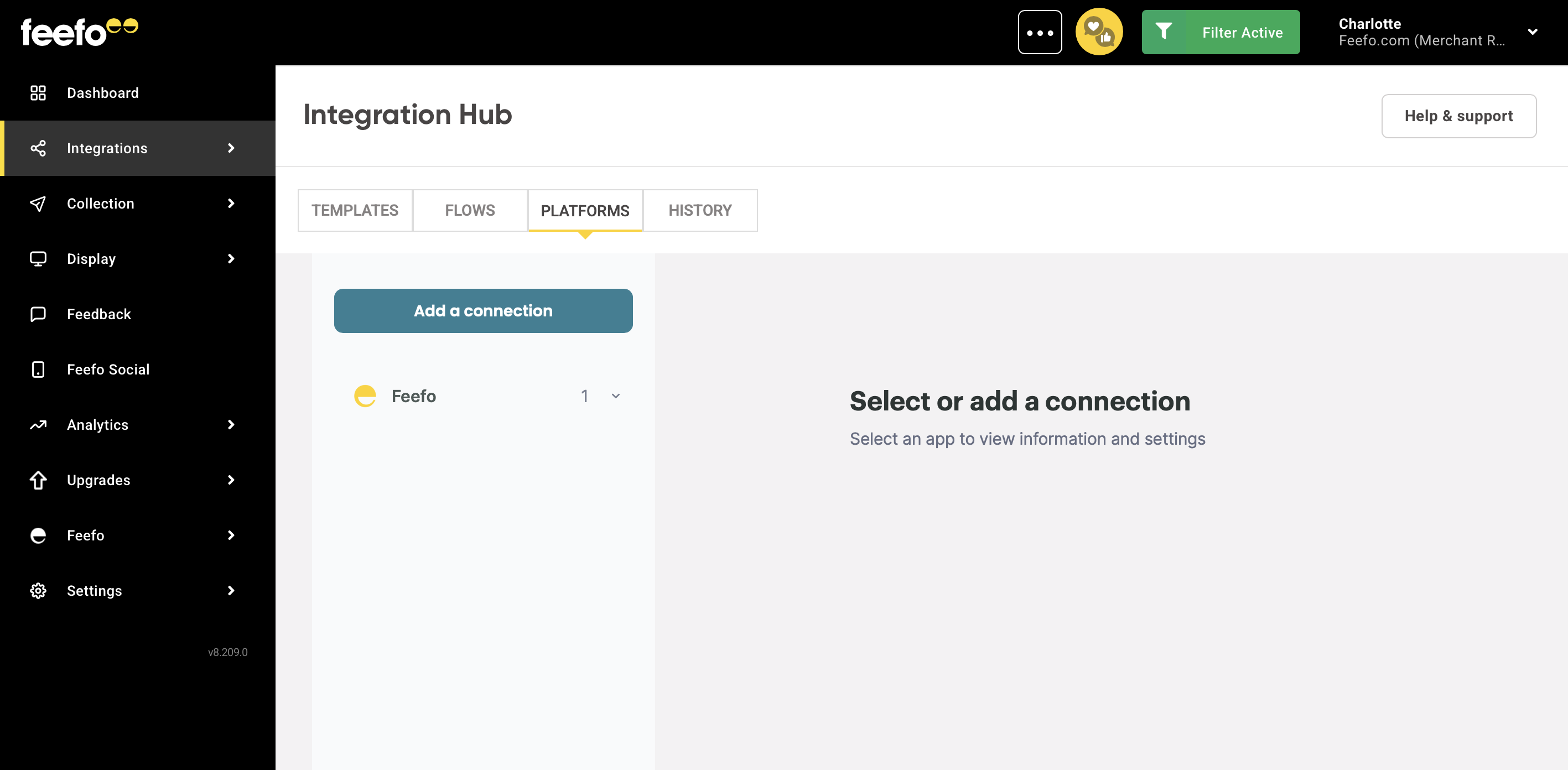
-
Find Magento in the search bar.
-
Come up with a name for your connection.
-
Enter your Admin username, Admin password, Domain URL.
-
The admin data is the same that you use to sign in to your Magento account.
-
In the Domain URL field paste your Magento account domain URL.
-
Click the Continue button.
Ready! Open the created connection. In the Integration Hub section you can change the name of your connection and refresh its access.